
Injection Moulding Machines are industrial systems used to manufacture plastic parts by injecting molten material into a mold cavity, where it cools and solidifies into the desired shape. These machines are essential for mass production of consistent, high-precision plastic components.
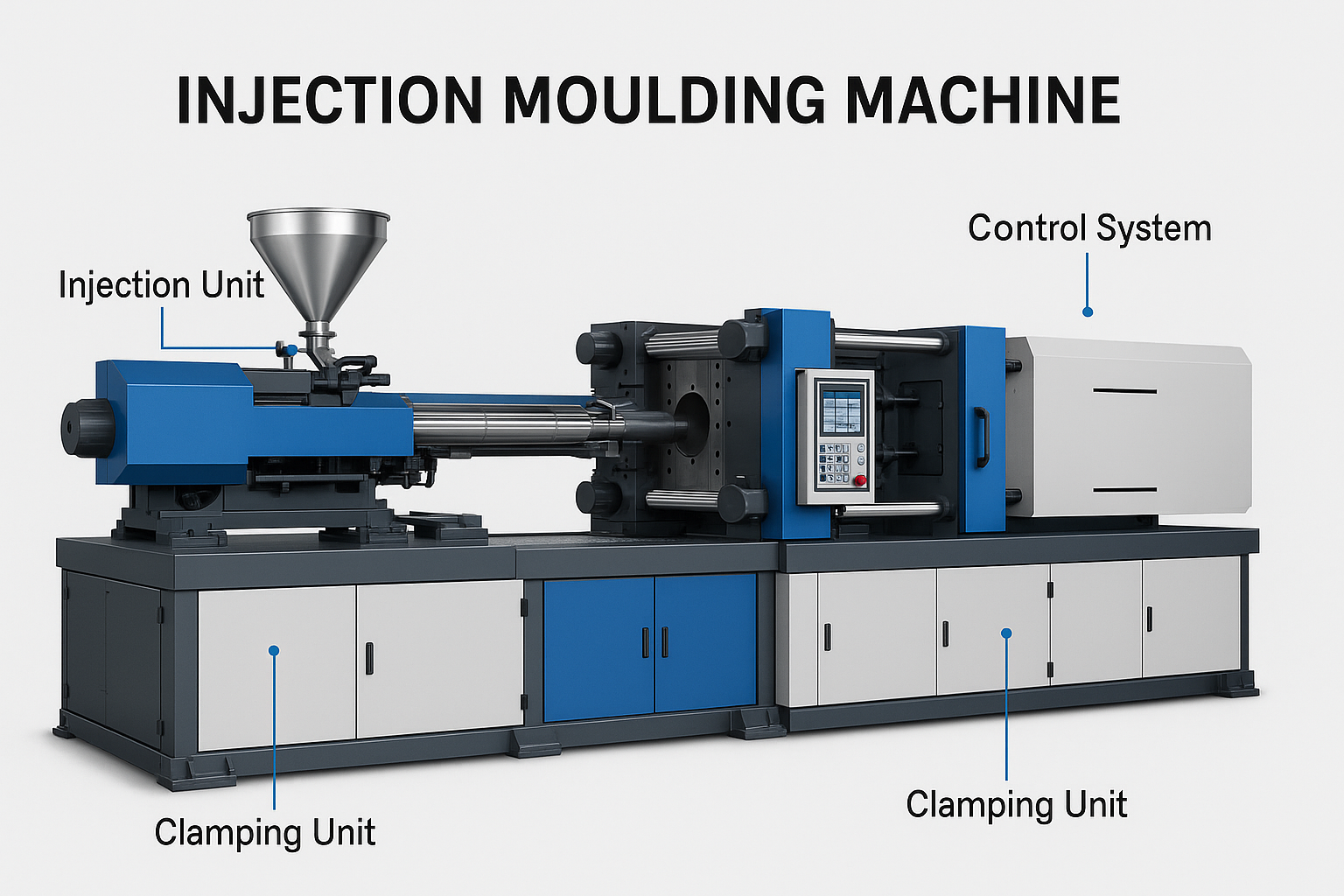
🔧 Core Components of an Injection Moulding Machine
- Injection Unit
- Heats and melts the plastic resin (usually thermoplastic pellets)
- Uses a reciprocating screw or plunger to inject the molten plastic into the mold
- Clamping Unit
- Holds the mold closed under high pressure during injection and cooling
- Opens and ejects the part once it solidifies
- Control System
- Manages temperature, injection speed, pressure, and timing
- Advanced systems allow for automation, monitoring, and fault detection
🏭 Types of Injection Moulding Machines
| Type | Key Features | Best Use Case |
|---|---|---|
| Hydraulic | Robust and affordable | General manufacturing |
| Electric | Energy efficient, high speed, cleaner | Medical, electronics |
| Hybrid | Combines benefits of both | Versatile industries |
| Vertical | Mold opens vertically, easy insert molding | Overmolding, electronics |
📌 Applications
- Electronics enclosures
- Automotive parts
- Medical devices
- Telecommunication housings
- Consumer products (toys, packaging)